





Curriculum
The FUSION SCIENCE program provides specialized subjects that are essential for studying fusion science from basic principles to cutting edge topics. This program also manages the Comprehensive Subjects Program and common subjects. (See the table below for details.)
| Subject | Credit | Content of Subject |
| Plasma Physics 1 | 2 | Fundamentals to learn plasma physics are lectured. First of all, single charged particle motions, then plasma behavior as fluids, diffusion, and waves in plasmas are explained. For the basic fusion plasma study, magnetohydrodynamics, equilibrium and stability are alsoexplained. Introductions to the kinetic theory and nonlinear effects are performed for advanced studies. |
| Plasma Physics 2 | 2 | Fundamental physics concepts for understanding the characteristic of fusion plasmas which are necessary in the plasma research will be described. Both aspects of the microscopic particle property and the macroscopic fluid property in the plasma behavior will be explained. The contents are composed of motion of a charged particle in various electromagnetic fields, relations between the distribution function in velocity space and the plasma fluid description, magnetohydrodynamic equilibrium and stability, waves in plasmas, basic idea of transport and resistivity and so on. |
| Fundamentals of Plasma Experiment |
2 | The aim of the lecture is to learn error analysis for allowing the scientists to estimate how large his uncertainties are, and to help him to reduce them when necessary. The basics of plasma diagnosis are reviewed. The error analysis based on the mathematical statistics and the least-squares fitting as its application are studied. The normal distribution and other important distributions are treated. |
| Advances in Plasma Science |
2 | The basic physics of plasma transport at the peripheral region and plasma-wall interaction in magnetically confined fusion devices are explained. Especially, the divertor system receives and should handle huge heat flux coming from main plasma. The lecture presents the history of the divertor development and critical issues for next step fusion devices. In addition, the basics of atomic and molecular processes applied in fusion and related plasma researches are given, including atomic and molecular physics. Kinetics of chemical reactions, and collisionalradiative model for spectroscopic diagnostics. |
| Fusion System Engineering |
2 | This lecture is an introduction to fusion engineering. Features and functions of fusion power plant systems and their subsystems such as superconducting magnets, heating devices, divertor, and blankets are reviewed. Concerning the magnets, properties of materials at low temperatures and superconductivity are reviewed, and their issues are discussed. In addition, technical issues of divertor and blankets for high heat flux and neutron irradiation are discussed. |
| Fusion Reactor Materials |
2 | Theories of elasticity, plasticity, strengthening and radiation damage of materials are reviewed. Tensile testing is explained as a major examination for materials, leading to a lesson in evaluation procedures and analyses on the test results. Materials adopted for the ITER, and candidate materials promising for future demonstration (DEMO) reactors are introduced including key properties. Based on the gap between neutron irradiation conditions and operation temperatures in the ITER and DEMO reactors, improvements of properties are discussed with some examples of recent fusion materials development. |
| Fundamentals of Simulation Science |
2 | Concepts, basic equations, algorithms, visualization analysis, characteristics and limitations of the models, numerical errors and data science approach are described for particle, fluid and gyro kinetic models commonly used in plasma simulations. |
| Mathematical Physics | 2 | Various methods of mathematical physics are used to treat complex physical systems such as plasmas in which diverse collective phenomena are produced by a huge number of charged particles interacting with each other through electromagnetic force. This lecture presents basic methods of mathematical physics used in analytical and statistical mechanics. As examples of application, one learns plasma kinetic theory, fluid model, and transport theory. |
| Scientific English Writing and Presentation at International Conferences |
2 | Because international collaboration is often required for the successful development of magnetic fusion energy, as seen in the case of ITER, the ability of communication in English is a “prerequisite” to be a successful research scientist. A series of lectures will provide students with the basic knowledge to write and present technical papers in English for international conferences, also with practice in reading technical literature and a with a review of relevant grammatical topics. |
| Fusion plasma science exercise I A |
2 | Exercises of experimental, theoretical and simulation science are given by advisering professors and other teachers. Discussions on the processes and results of research are guided which are necessary to complete educational course. |
| Fusion plasma science exercise I B |
2 | |
| Fusion plasma science exercise II A |
2 | |
| Fusion plasma science exercise II B |
2 | |
| Fusion plasma science exercise III A |
2 | |
| Fusion plasma science exercise III B |
2 | |
| Fusion plasma science exercise IV A |
2 | |
| Fusion plasma science exercise IV B |
2 | |
| Fusion plasma science exercise V A |
2 | |
| Fusion plasma science exercise V B |
2 | |
| Fusion plasma science investigation I A |
2 | Seminar is organized for small number of students on fusion plasma science. Basic scientific knowledge, intelligence and flexibility are trained for the basis of original research. Teachers in the same research field as students lead seminar as core members. |
| Fusion plasma science investigation I B |
2 | |
| Fusion plasma science investigation II A |
2 | |
| Fusion plasma science investigation II B |
2 | |
| Fusion plasma science investigation III A |
2 | |
| Fusion plasma science investigation III B |
2 | |
| Fusion plasma science investigation IV A |
2 | |
| Fusion plasma science investigation IV B |
2 | |
| Fusion plasma science investigation V A |
2 | |
| Fusion plasma science investigation V B |
2 | |
| Exercise of scientific paper analysis |
2 | To write academic papers, it is important to conduct excellent research, but in fact it alone is not enough. “Method of research” differs depending on each theme, but there is a common “method of writing” when summarizing results of research as an academic paper. Rather than merely listing the research results, a story from the intro to the conclusion is necessary. How to make this story will be explained as a “way of writing”. |
| Fusion plasma science seminar |
2 | Learn latest information on research activities by attending colloquiums on fusion plasma sciences. Improve students’ ability of preparing and talking their presentations and learn techniques for making an excellent presentation. Study how to examine their own and others’ researches on fusion plasma sciences by joining the discussions in the colloquiums. |
| Basic exercise on physics and engineering 1 | 2 | This exercise program gives you the basic knowledge to start experimental research on fusion plasma science. The program provides lectures and practices on the most important technologies in (1) vacuum instruments, (2) electrical and optical signal measurement systems, and (3) high current / voltage power supply usage and design. This knowledge is useful for studying not only fusion plasmas such as LHD plasmas, but also basic laboratory plasmas. |
| Basic exercise on physics and engineering 2 | 2 | In this exercise program, the bases of the following techniques are given: – the handling of the radiation, which is necessary for safe experimental study in fusion experimental devices – the handling of the cryogenic system including the high pressure gas facility that is acquired for the superconducting coil and cryogenic system in fusion experimental devices. – the handling of facilities of material analyses and fabrications which are necessary for studies of plasmawall interactions and the fusion engineering. |
| Basic exercise on physics and engineering 3 | 2 | This exercise program gives the basic knowledge of data processing, theoretical analyses, and numerical simulations which are required in plasma physics researches. In particular, data and image processes (visualizations), fundamentals of simulation studies for UNIX and Fortran programing, and applied mathematics such as vector analyses and complex analyses will be practiced. |
| Introduction to Project Management | 2 | Project is an individual or collaborative enterprise for achieving a particular aim. In order to complete the project within the deadline, tasks, the process, works, costs and risks should be carefully managed. This lecture provides the fundamental knowledge on the project management and examples of big projects in the world, so as to improve your ability for problem solution and management. |

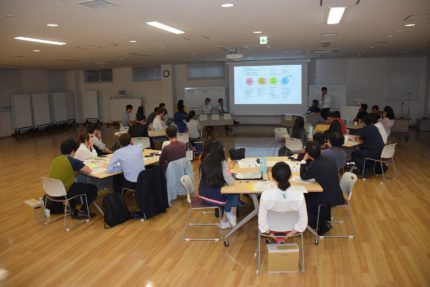
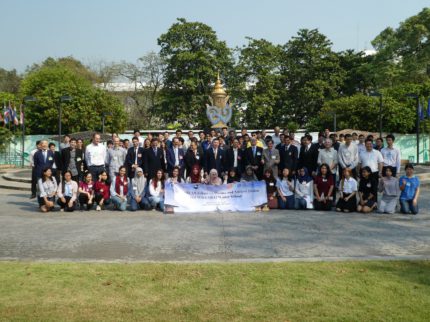
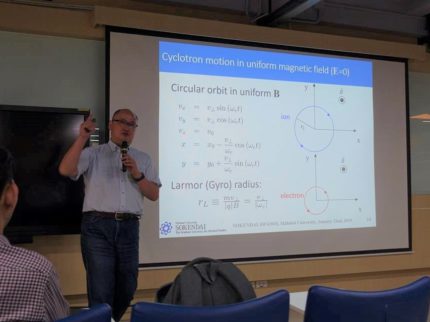
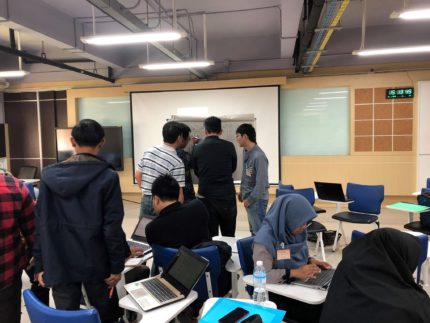
Training Programs
 |
 |
Credits/Degrees
Requirements for Graduation/Required Number of Credits
Degree to be awarded
All the students who graduate from SOKENDAI obtain the degree of “Doctor of Philosophy”, “Doctor of Science”, or “Doctor of Engineering” depend on the contents of the doctoral theses.
[*Master’s degree]
Students who have registered in the 5-year course and are permitted to withdraw from SOKENDAI and have satisfied the requirements for obtaining a master’s degree as set forth in Article #16 of the Standards for the Establishment of Graduate Schools may be awarded a master’s degree.
Evaluation criteria for the doctoral thesis in the Department of Fusion Science
The doctoral thesis will be reviewed based upon the philosophy of the department and upon the perspectives of the internal and external members of the doctoral thesis committee regarding fusion research.
- Clarity of the objective and the academic significance of the research results
- Originality of the research
- Sufficient knowledge in the field of specialization and sufficient language skills for international activity
- Publication(s) in peer-reviewed journal(s) as first author or publication plans based upon results in the doctoral thesis
Syllabus
Basic exercise on physics and engineering・Special Lectures for Graduate School
These lectures aim to provide graduate students with fundamental scientific and engineering skills and knowledge.
We offer two types of courses: Basic Exercise in Physics and Engineering and Special Lectures for Graduate School.
◆Basic exercise on physics and engineering
Exercise Course
・Basic exercise on physics and engineering1:Basic Course for Vacuum Technology/Lecture and practice of fundamental technics for diagnostics/Basic technology practice on high voltage / high current devices
・Basic exercise on physics and engineering2:Fundamental Handling Techniques on Cryogen and Cryogenic Equipment/Exercise for the material processing and analysis/Practice course of basic radiation handling and safety management
・Basic exercise on physics and engineering3:Data and image processing training course/Practice of UNIX and Fortran programming/Practice on physical mathematics
※These courses are part of the Fusion Science program.
※If graduate students from other universities wish to participate in the Basic Exercise on Physics and Engineering, please contact the Graduate Student Affairs Section.
(Please note that participation may not be possible depending on the circumstances. )
Download link for the syllabus of “Basic Exercise on Physics and Engineering”
◆Special Lectures for Graduate School
Course
・Practical study of basic plasma diagnostics
・Mathematical formulas for the Coulomb collision operator and their applications
・Fundamental Physics of Edge Plasmas in Fusion Reactors — From an Introduction to the Latest Research Trends —
・Engineering Analysis of Tritium Fuel Cycle Systems
※The Special Lectures for Graduate School is open not only to SOKENDAI students but also to students from other universities and working professionals.
※For inquiries or to apply for the course, please contact us at this email address .
※If you wish to attend, please contact the above email address by [TBD – applications scheduled to open in late March].
※ Please note that we may not be able to accommodate all requests for enrollment.
Download link for the syllabus of “Special Lectures for Graduate School”
International Coordinated Research
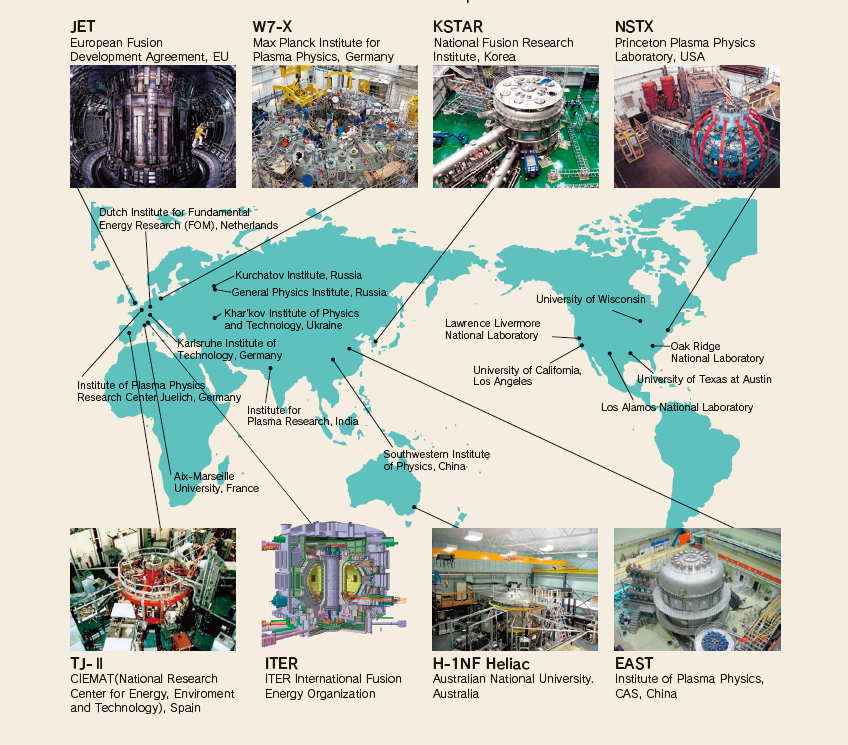
Examples of International Coordination
The IEA Stellarator-Heliotron Cooperation
International Stellarator-Heliotron Confinement and Profile Database Activity
Extensive multi-national and multi-institutional coordinated research among Stellarator-Heliotron (S-H) devices has been promoted under the auspices of the IEA (International Energy Agency) Stellarator-Heliotron Technology Cooperation Program.
Contracting parties are Australia, EURATOM, Japan, Russia, Ukraine, and the USA (in alphabetical order). Among them, Japan, through the Director General of the National Institute for Fusion Science, is performing leadership responsibilities as vice-chair. The scaling law for the energy confinement time, the so-called ISS04, was successfully derived based on the extended S-H confinement database. Toward deepening physics understanding and increasing the predictive capability, the profile database activity has been steadily expanded with the participation of multiple institutions.
The IEA PWI Technology Cooperation Program (TCP)
The Plasma-Wall Interaction (PWI) TCP is a multilateral agreement involving Japan, Europe, the United States, Australia, and the United Kingdom. In Japan, NIFS serves as the implementing organization. Under this agreement, researchers from NIFS and universities, as well as students who are future researchers, are conducting international collaborative research at institutions around the world on the interactions between plasma and material walls. These collaborations mainly involve experiments using linear plasma devices and computational simulations. Significant achievements have been made in various areas, including studies on the effects of plasma irradiation on fusion reactor wall materials through surface analysis, research on plasma behavior in the peripheral regions of fusion cores, and the development of plasma diagnostic techniques.
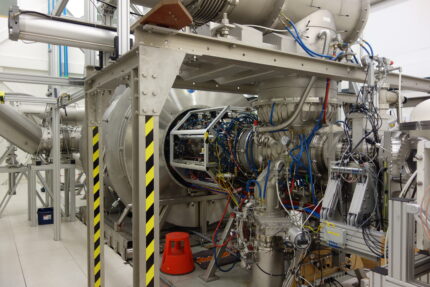
SOKENDAI Student Dispatch Program
This programs is supported by a grant from the University that enables the students to take part in international joint research projects. These projects foster highly specialized world-class researchers who have global perspectives. It provides students opportunities to study at cutting-edge research institutes abroad and to pursue in-depth study with a number of prominent researchers. Students are able to gauge the positioning of their own research and forge friendships and make exchanges with new colleagues.
Financial support for student
We have enhanced the financial support system so that students may concentrate on their studies.
(1)Exemption from Tuition
When a student has difficulty paying tuition for economic reasons, the student recognized for outstanding academic achievements may be exempted from paying full tuition or one-half tuition following the prescribed screening by SOKENDAI.
(2)Research Fellowships for Young Scientists from Japan Society for the Promotion of Science (JSPS)
This research fellowship offers third-year students and higher the opportunity to concentrate on their research. A research subsidy (living expenses) will be paid after successfully passing the prescribed screening. At the same time, the student must meet the qualification requirements for eligibility to receive a Grant-in-Aid for Scientific Research (KAKENHI) grant. These grants will be provided after a screening each year.
(3)Monbukagakusho(Ministry of Education, Culture, Sports, Science and Technology, MEXT)Honors Scholarship for Privately Financed International Students
The MEXT Honors Scholarship for Privately Financed International Students is provided by the Japan Student Services Organization (JASSO). This scholarship is intended for exceptional privately funded international students, and is an open competition.
(4)The Associate Researcher system at NIFS
Excellent students who are in the third-year or higher at NIFS can participate in research projects. This associate researcher system promotes research effectively and develops the abilities of young researchers. When a student is appointed as an Associate Researcher, a research scholarship will be provided.
(5)Other scholarships, research grants, and travel expenses
Students may apply for scholarships, grants for research, and other funding in addition to those described above. Among these sources of funding, there also are those that are advertised publicly for open competition and those intended only for students enrolled in the fusion science program. Also, NIFS and SOKENDAI will pay travel expenses for a student to attend an academic conference.